screw conveyor
Screw Conveyor
Screw conveyors are divided into two types in terms of conveying form: shaft screw conveyors and shaftless screw conveyors, and in terms of appearance, they are divided into U-shaped screw conveyors and tubular screw conveyors.
Shaft screw conveyors are suitable for non-sticky dry powder materials and small particle materials. (For example: cement, fly ash, lime, grain, etc.)
Shaftless screw conveyors are suitable for conveying sticky and easily entangled materials (for example: sludge, biomass, garbage, etc.)

Advantages of Screw Conveyor
- The spiral shaft and the hanging bearing, head, and tail shaft are connected by embedded tongue type. The installation and disassembly do not require axial movement, which is convenient for maintenance. , long core shaft, less hanging, and fewer fault points.
- The variable diameter structure is adopted to increase the volume of the hanging bearing to avoid contact between the hanging bearing and the material. The life of the hanging bearing can reach more than two years.
- All transmission parts adopt the floating connection method. The hanging bearing is a universal joint structure, so the spiral body, hanging bearing, and tail assembly form an integral rotating floating body, which can rotate freely with the conveying resistance within the range without jamming or blocking the material.
- The head and tail bearing seats are both outside the shell, and all bearings adopt multi-layer sealing and matching sealing technology, and the bearings have a long service life.
Chainmill Applicable Materials

Grinding Granular Fertilizers
Rotary conveyors are mainly used to transport various powdered, granular and small block materials. The bulk materials transported include grains, beans, flour and other grain products, cement, clay, sand and other building materials, salts, alkalis, fertilizers and other chemicals, as well as coal, coke, ore and other bulk cargoes.

Screw conveyor classification
Screw conveyors are divided into two types: horizontal screw conveyors and vertical screw conveyors from the perspective of the displacement direction of the conveyed materials.
Screw conveyors made of high-strength plastics are also called food screw conveyors and screw elevators. They are mainly suitable for conveying large products. Such as cartons, turnover boxes, bottled water, etc.
According to the characteristics and structures of the conveyed materials, screw conveyors include horizontal screw conveyors, vertical screw conveyors, flexible screw conveyors, and spiral tube (roller conveyor) conveyors.

Vertical screw conveyor
The speed of the screw of the vertical screw conveyor is higher than that of the ordinary screw conveyor. Under the action of centrifugal force, the added material generates friction with the casing. This friction prevents the material from rotating with the spiral blades and overcomes the gravity of the material falling, thereby realizing the vertical conveying of the material. The machine has a small conveying capacity, a small conveying height, a high speed, a large energy consumption, and the lifting height is generally not more than 8 meters.

Spiral tube (roller conveyor) conveyor
The spiral tube conveyor is a cylindrical casing with continuous spiral blades welded in it, and the casing rotates with the spiral blades. The added material rotates with the shell and is lifted due to the centrifugal force and friction, and then slides down along the spiral surface under the gravity of the material, so that the material rotates with the spiral tube, thereby realizing the forward movement of the material, just like the non-rotating screw moves along the rotating nut, achieving the purpose of conveying materials.

Horizontal screw conveyor
The machine is easy to load and unload, and can complete the mixing, stirring or cooling functions during the conveying process. It is suitable for horizontal or slightly inclined (below 20º) temperatures of -20—+40℃, and the conveying material temperature is -20—+80℃.

Flexible screw conveyor
The spiral body spindle of this machine is flexible, so the conveying line can be arranged according to the spatial curve as needed. According to the different length ratios of the horizontal and vertical (large angle) sections in the layout line, its working principle is designed according to the ordinary screw conveyor or vertical screw conveyor.

Daily maintenance of screw conveyors
During the use of screw conveyors, it is important to pay attention to daily maintenance so that they can work well with the sand dryer to the greatest extent, ensure production and efficiency, and extend the service life of the equipment.
- Lubricating oil should be added to transmission parts such as bearings, gears, and chains regularly.
- After the box conveyor is stopped, the wear of the spiral blades should be checked and repaired if the wear is severe.
- The conveying volume should not be overloaded otherwise the material cannot be discharged, causing the spiral shaft to bend and the box to swell.
- When the conveying medium is of high viscosity, it should be noted that the expansion and contraction of the box is free and there is no jamming. If there is any jamming, it should be solved immediately.
- When the conveyor is running, and the noise is harsh, the cover should be opened for inspection and troubleshooting.
Our Products
We are the industry heads and produce the most reliable and trendy fertilizer production line solution you are looking for.
NPK compound fertilizer steam granulation solution
Suitable for making compound fertilizers, organic fertilizers and mixed fertilizers with diversified formulas with large output
NPK roller extrusion granulation method production
Save energy consumption, flexible output, small investment
High tower prilling method npk fertilizer production
Large investment, large output, suitable for making high-nitrogen NPK compound fertilizer
BB fertilizer blending line
Small investment, flexible output, and can mix a variety of formulas
The only place where you’ll get the perfect solution for fertilizer industry needs.
What Else Does TONGLI offer?
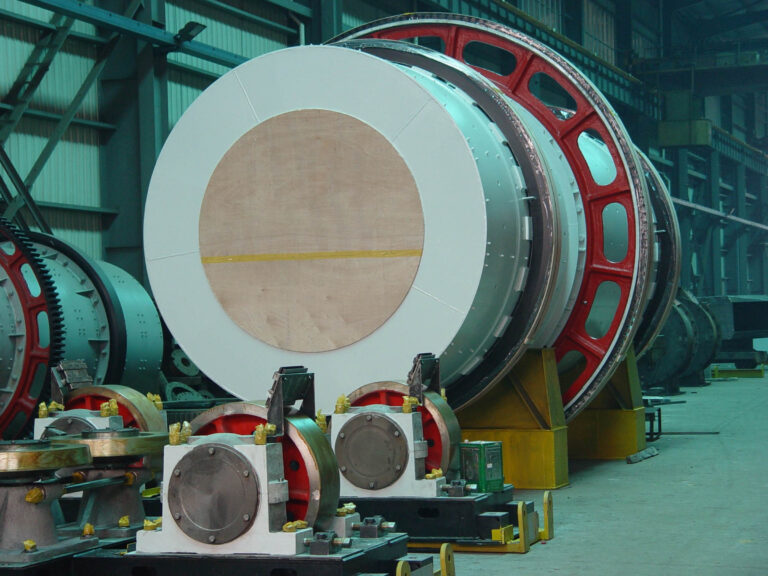
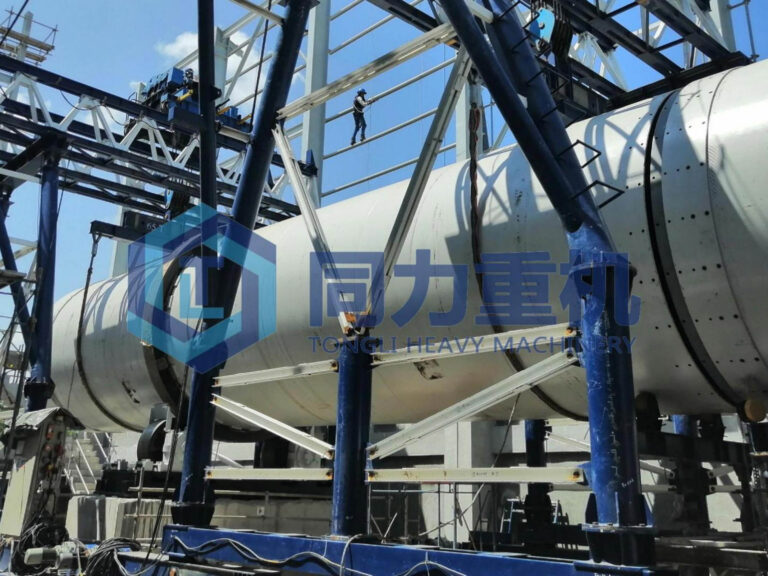
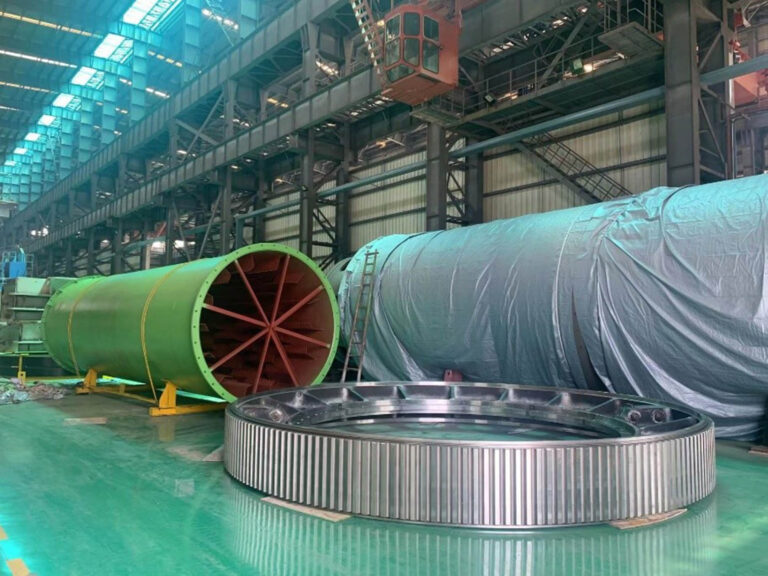
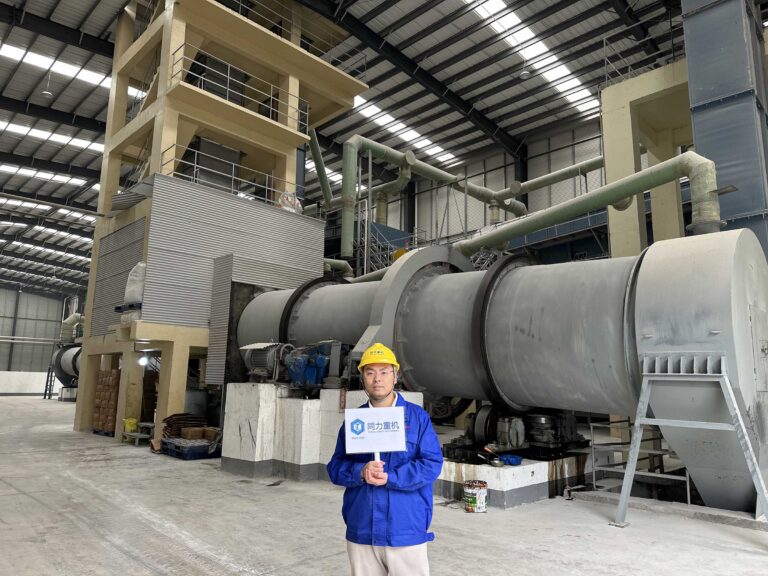
Frequently Asked Questions
1. Installation: After the machine arrives at the factory, it will be installed in conjunction with the process, indicating the elevation and horizontal position, tilted installation, generally tilted at 2-5 degrees (which can be adjusted to make the user’s needs), and the machine bracket and transmission frame even ground angle holes, which can be mounted on rolled condensed soil.
① machinery each base and the foundation between the pad into the deed-shaped mat board thickness should not be greater than 30-35mm;
② the height of the base with the deed-shaped pad to adjust the height of the base to make the base 5 degrees of inclination;
③ After each base is adjusted properly, put the cylinder on the support and adjust the carrier wheel;
④ Install the drive part of the film wrapping machine;
⑤ Be sure that the bracket wheel, transmission device and cylinder are properly adjusted and start pouring cement, and after 8-10 days, start the no-load test run after the cement is solidified;
⑥ Method of adjusting the position of the machine body:
a. On the full length of the left and right sides of the machine body, install two parallel steel wires with a diameter of 0.5-1mm and check the level of the wires with a level meter;
b.Lower two phase hammers tangent to the rolling circle from each rolling circle down the sides of the dryer;
c.Measure the distance from the steel wire to the wire drop to detect the body in the horizontal position;
d. Measure the relative vertical elevation of the two rolling circles to check the position of the machine body in the vertical plane;
e. Use the method of moving the electric torque wheel to adjust the measurement of the two articles c and d, so that the machine body is in the correct position;
2. No-load test run:
1). Uninterrupted no-load for 8 hours, the temperature of each bearing should rise smoothly, and the temperature of the bearing should not be higher than 50 degrees Celsius at the termination of the test run;
2). The noise of gears should be average and should not be high or low;
3). After the test run, the bearings shall be observed without serious wear and abrasion.
A.Starting the machine
1. The following preparations should be made before starting the film wrapping machine;
a. Check and adjust the powder feeding device and protection equipment;
b. All bearings and lubricating devices of friction surfaces should have appropriate quantity of grease;
2. It is forbidden to start the film wrapping machine without checking the film wrapping machine and auxiliary mechanical equipment;
3. The steps to start the film wrapping machine are as follows:
a. Start the motor of the film wrapping machine.
b. Start the feeding and discharging conveying equipment.
B. Stopping
1. The steps to stop the film wrapper are as follows:
A. Stop adding raw material to the wrapper;
B. Turn off the drive motor of the wrapping machine;
C. Stop the equipment for transporting granular materials;
1. Dry grease should be smeared at the gears before starting the machine;
2. Dry grease to be smeared on the surface of rolling belt once in 7 days;
3. Bearing housing to be hit or renewed with new dry grease every three months;
4. Add gear oil once before the reducer is used and replace it every four months thereafter;
Pinion gear is worn, install pinion gear upside down, if both sides are worn, new gear is needed.
The intermediate connection between the large gear and the cylinder is damaged, adjust the connection and make appropriate treatment if necessary.
Clamping roller belt to the side of a concave joint
Clamp the belt to the concave joints with pads or wedges, but beware of over-clamping, which can lead to accidents, but uneven tensioning can cause the machine to jump and vibrate.
Wheel wear Refurbish or replace the wheel according to the degree of wear
Block wheel wear Repair, move, or replace with new block wheel depending on degree of wear
Simple body vibration